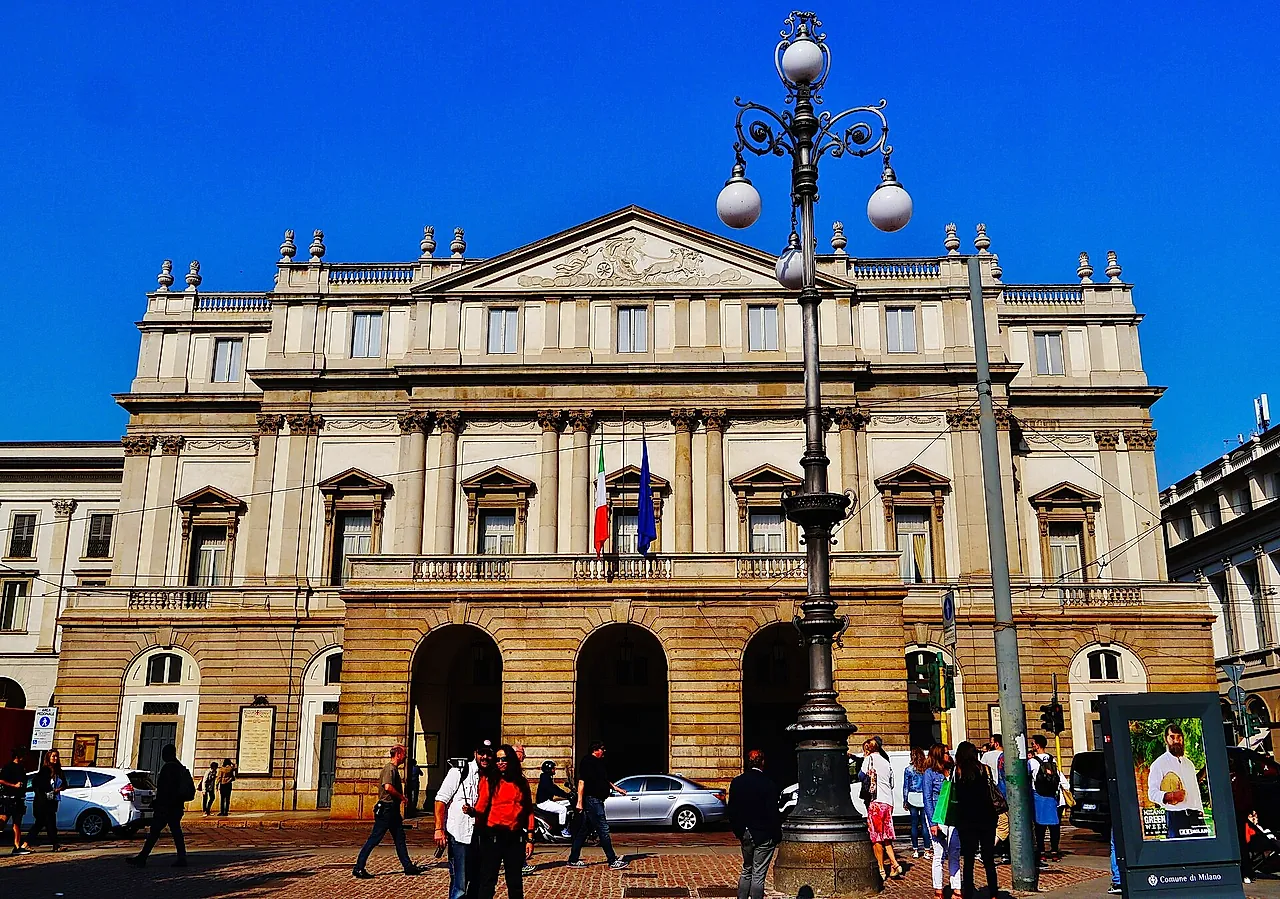
Milan · Piazza della Scala · Opera, portraits and instruments
La Scala Theatre Museum: tickets, hours and what to see
A museum of opera and theatre in the former Casino Ricordi, beside the opera house, with portraits, busts and instruments and, when there is no rehearsal, a look at the auditorium from the boxes. Opening hours, the view of the auditorium and the Theatre tour.
Today
Opening hours for every month are on the Opening hours page.
Checked against the official website on 24 October 2026 · Official source
In short
- The Museo Teatrale alla Scala is generally open every day from 9:30 to 17:30, with last entry at 17:00. It is closed on 7, 25 and 26 December, 1 January, Easter, 1 May and 15 August, and on 24 and 31 December it closes at 15:00, according to the museum’s website read on 24 October 2026. Individual visitors do not have to book.
- The museum ticket gives a view of the auditorium from the third-tier boxes only when there are no rehearsals, performances or public events, and only six people at a time (four during rehearsals). It does not include a guided tour.
- The museum also offers its own guided tour of the Theatre, which lasts 60 minutes (Royal Box and historic boxes), on the days with no rehearsals or events, according to the museum on 24 October 2026.
- The guided tours of La Scala on this site are run by third-party operators: from about 1 to 1.5 hours, a 2-hour tour that adds the Duomo and a city walk of about 3.5 hours with coach transfers. This guide covers the museum, not tickets for performances.
A look at the auditorium from the boxes
According to the museum, the visit begins with a view of the hall from the boxes of the third tier, and continues in the museum rooms. The view is possible only when there are no rehearsals, performances or events open to the public. The boxes are open to six people at a time, four during rehearsals.
The museum publishes a “Best view” page with the best time slots, updated every two weeks; we could not read it, so check it before you go. A lift reserved for visitors goes up to the museum rooms and the boxes.
What the museum shows
The museum says that portraits, busts of the great figures of opera of all times, their memorabilia and musical instruments tell the story of the theatre and of melodrama, and that there are also temporary exhibitions. It offers a free app with an audio guide and routes by theme and time available, a treasure hunt for children and multimedia totems in every room. The museum says that about 45 minutes are enough for a complete visit.
Italian Wikipedia adds that the museum has 14 rooms and lists antique instruments, a painting by Angelo Inganni of the façade in 1852 and a piano that belonged to Franz Liszt. The museum does not publish a list of objects that we could read, and displays and exhibitions change, so we cannot promise a given piece.
The opera house and the museum: some dates
According to the museum, the Teatro Regio Ducale burned down on the night of 25 February 1776. Empress Maria Theresa then commissioned Giuseppe Piermarini, who built the new theatre on the site of the church of Santa Maria della Scala; Wikipedia gives the inauguration as 3 August 1778. Baedeker’s 1913 handbook (p. 155) already called it one of the largest theatres in Europe. In the square, the same guide (p. 162) notes the monument to Leonardo da Vinci by Magni, of 1872.
The theatre was heavily damaged by bombing on the night of 15 to 16 August 1943 and reopened on 11 May 1946 with a concert conducted by Arturo Toscanini. Mario Botta’s restoration ran from January 2002 to December 2004. The museum’s own history page says that the antiquarian Jules Sambon put his collection of theatrical objects up for auction on 1 May 1911, and that the museum opened in the former Casino Ricordi less than two years later; Wikipedia gives 8 March 1913 as the official inauguration.
Nearby: from Piazza del Duomo to the Galleria
The Galleria Vittorio Emanuele II is a covered arcade that connects Piazza del Duomo with Piazza della Scala, so it is on the way between the Cathedral and the museum. Giuseppe Mengoni designed it after a competition in 1863, and King Victor Emmanuel II laid the first stone on 7 March 1865. According to Wikipedia, the arch on Piazza del Duomo and the northern porticoes were completed in 1878.
In a straight line the centre of the Galleria is about 195 m from the museum. We did not look for official access rules for the Galleria.
Nearby: under the Galleria’s dome
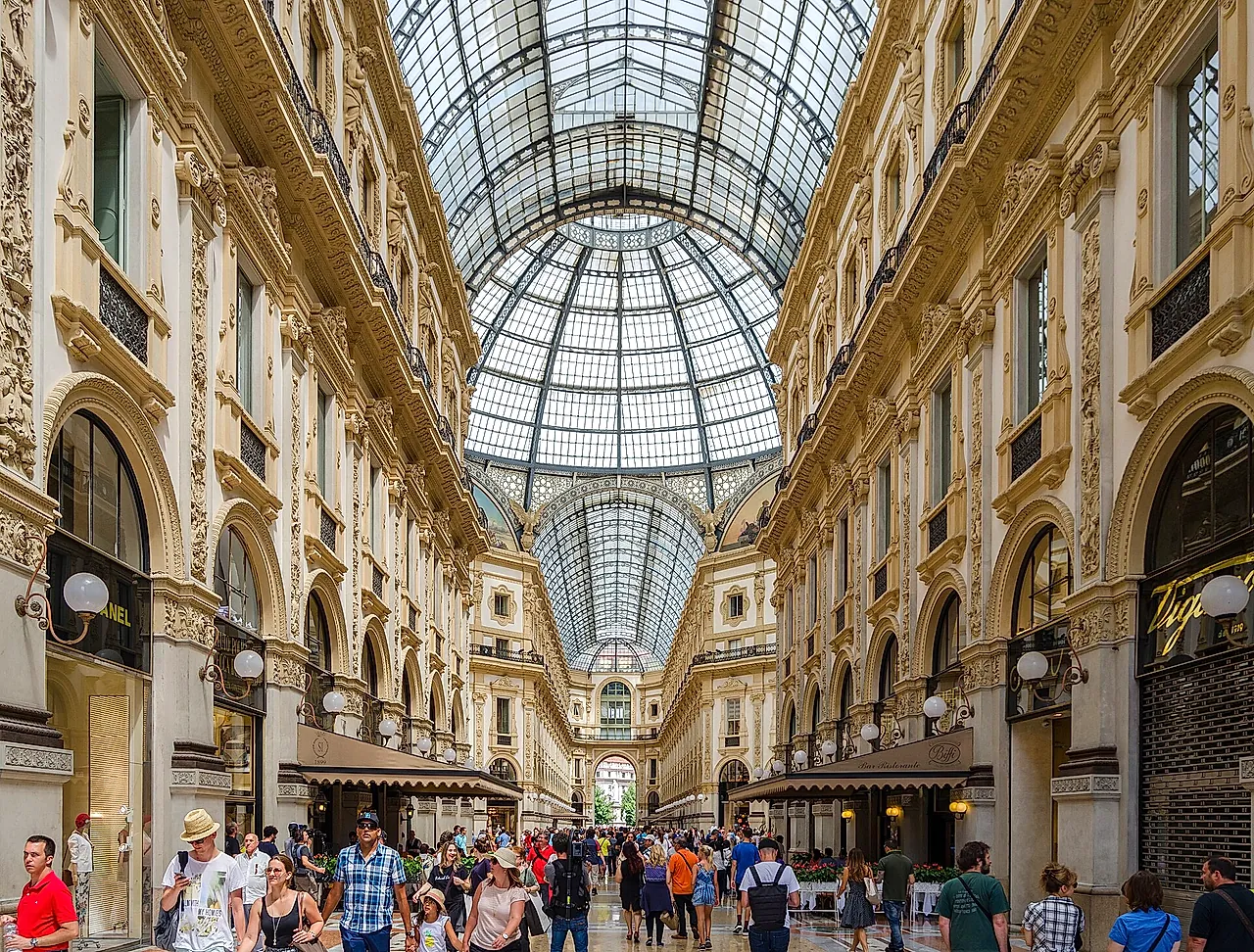
The Galleria has two crossing arms, the longer one about 196 m and the shorter one 105 m, and an octagon at the centre under an iron and glass dome that is 39 m wide and 47 m high at the lantern, according to Wikipedia. Its nickname is “the drawing room of Milan”. Baedeker’s 1913 handbook (p. 162) called it the most imposing structure of its kind in Europe.
The Galleria was damaged by the bombing of 15 and 16 August 1943, and its restoration was completed in 1955. A major restoration ran from March 2014 to April 2015.
Visitor guide
Milan Tours and Experiences: Bus, Bike, Boat and City Card
Seven Milan tours compared: two hop-on hop-off buses, two bike tours, a boat aperitif, an audio guide app and a city card, with what each includes.
Day Trips from Milan: Lake Como, Lugano, Bernina and Maggiore
Day trips from Milan compared: Lake Como, Lugano, the Bernina Red Train, Lake Maggiore boats and Villa del Balbianello: times, languages, inclusions.