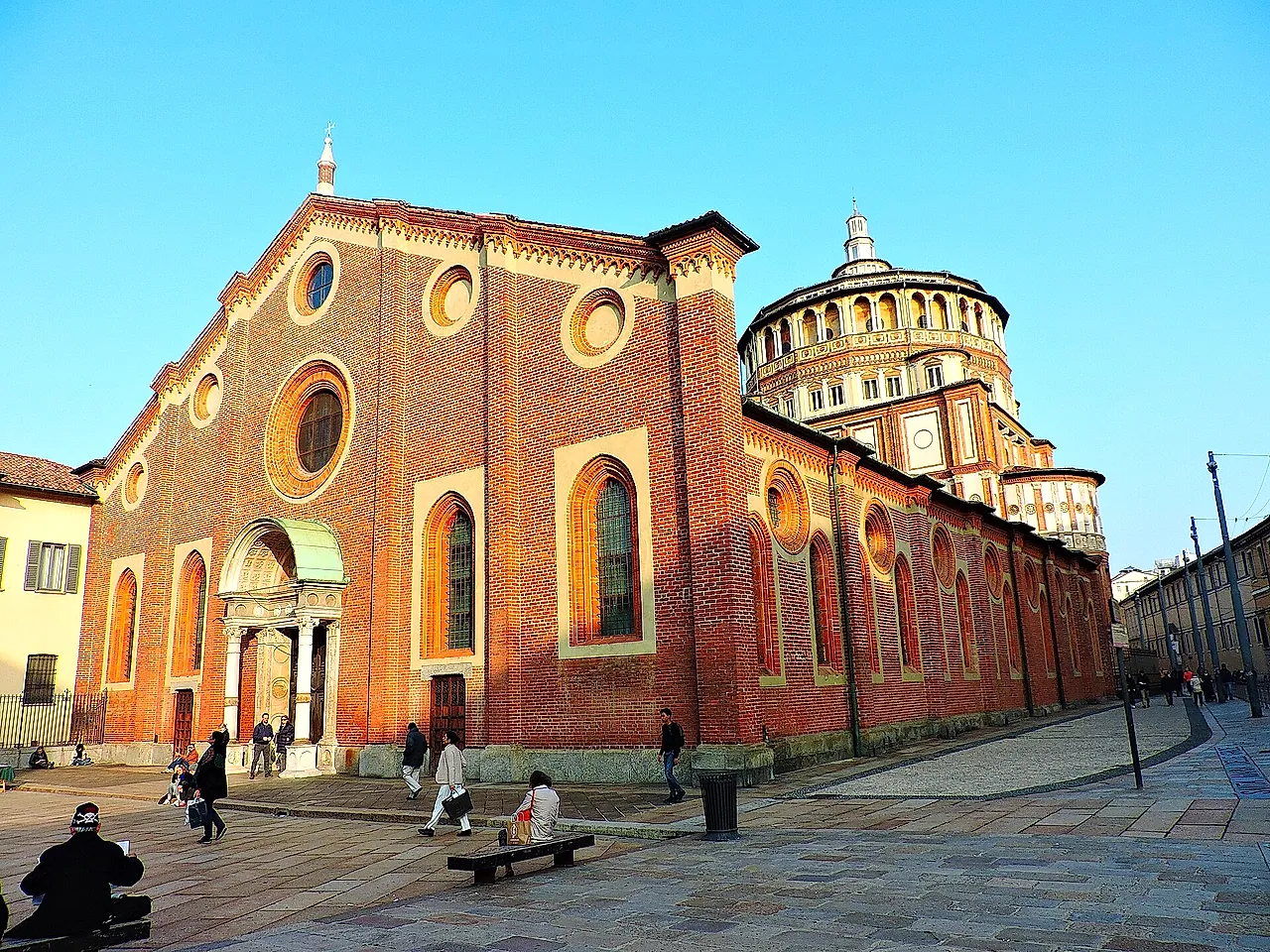
Milan · Santa Maria delle Grazie · Leonardo da Vinci
The Last Supper in Milan: how to book and opening hours
Leonardo’s wall painting in the refectory of Santa Maria delle Grazie, a UNESCO World Heritage site since 1980. Entry is by reserved time slot only: booking rules and hours.
Today
Opening hours for every month are on the Opening hours page.
Checked against the official website on 24 October 2026 · Official source
In short
- The Last Supper can only be seen with a reservation, for everyone, children and free-entry visitors included, in turns of 15 minutes for at most 40 people. The museum has a full-price ticket, a reduced rate for young visitors and free entry for several categories; the details are on its FAQ, read on 24 October 2026.
- It is open Tuesday to Sunday from 8:15 to 19:00, with last entry at 18:45, and closed on Mondays, on 1 January and on 25 December. Arrive 30 minutes before your booked time: whoever arrives later loses the right to enter. The ticket is in your name and cannot be refunded, and date, time and name cannot be changed.
- Tickets go on sale in quarterly releases: September to December 2026 opened on 23 June 2026 at 12:00. More tickets are released online every Wednesday at 12:00 for the following week. January to April 2027 were not yet on sale when we read the site, and we could not confirm the opening date.
- The museum also runs its own guided visits, from 45 minutes, at fixed times, which are added to the ticket.
- The cards on this site are all guided visits run by third-party operators: about 45 minutes to 1 hour with entry included (in small groups on some), and longer tours that add the Castello Sforzesco, the Duomo or a walk through the city. Entry is in timed turns for all visitors.
The painting and the refectory
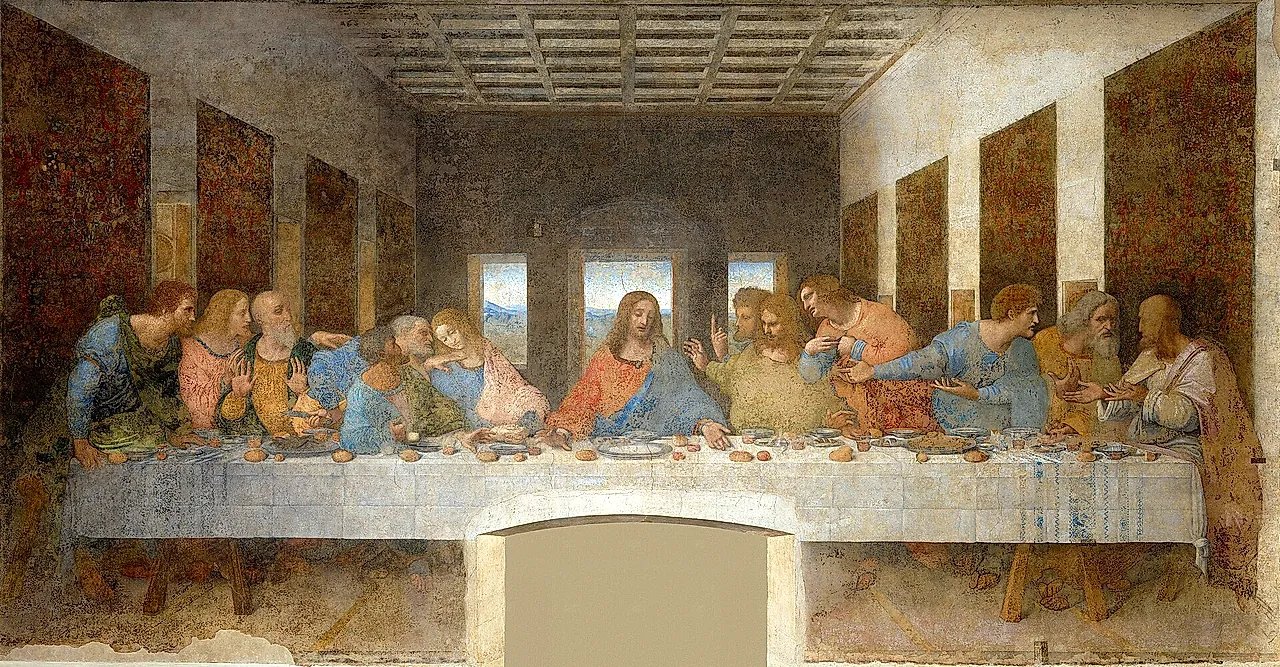
According to the museum, the Last Supper was painted between 1494 and early 1498 on the whole north wall of the refectory of the convent of Santa Maria delle Grazie. It measures 460 × 880 cm, and the museum's data sheet gives the technique as dry mural painting. In it Leonardo shows what the museum calls “the movements of the soul” (our translation).
The refectory was the room where the friars met to eat, pray and meditate. On the opposite wall is the Crucifixion by Giovanni Donato Montorfano, a fresco dated after 1495 and in good condition; at its foot Leonardo probably painted portraits of Ludovico il Moro, Beatrice d'Este and their children, of which little more than a shadow remains, the museum says.
Why the painting is so fragile
Leonardo did not use the traditional fresco technique. According to the museum, he chose a method that allowed him to work slowly and to change what he had already painted: a fat tempera, with pigments mixed with egg yolk, applied on dry plaster over a white preparatory layer. That made the painting much more vulnerable and fragile than a fresco.
The museum traces the decay. In 1517 the canon Antonio De Beatis wrote that it “begins to spoil”; in 1568 Vasari saw only “a dazzled blotch”; in 1625 Cardinal Federico Borromeo spoke of “falling crusts” (our translations). From the 18th century the museum counts nine documented restorations, and a caption on its site mentions Luigi Cavenaghi's work in 1908.
In August 1943 a bombing brought down the roof, the vaults and the east wall of the refectory, and the two paintings on the short walls survived. The last major restoration, by Pinin Brambilla Barcilon, ran from 1977 to 1999. Since then, the museum says, prevention rests on air control in the refectory, a limited number of visitors, environmental monitoring and a route with alternating automatic doors.
Santa Maria delle Grazie: church, convent and Ludovico il Moro
In 1460 Count Gaspare Vimercati gave land to the Dominican friars. Works began in 1463 under Guiniforte Solari, and the museum says the convent was completed in its essential parts in 1469 and the church in 1482; other sources give 1497 for the church. The tribune, which Wikipedia dates to 1492-1493 and attributes to Bramante, was rebuilt with Ludovico il Moro's money.
Ludovico Sforza, called il Moro, wanted Santa Maria delle Grazie to be his family mausoleum, and the decoration of the refectory was entrusted to Leonardo, who had arrived in Milan in 1482 and stayed at Ludovico’s court until 1499, according to the museum. We have not confirmed the church’s hours or whether it has a separate admission; the official guided visit that includes the church lasts 90 minutes.
UNESCO, the cloister and the rest of the complex
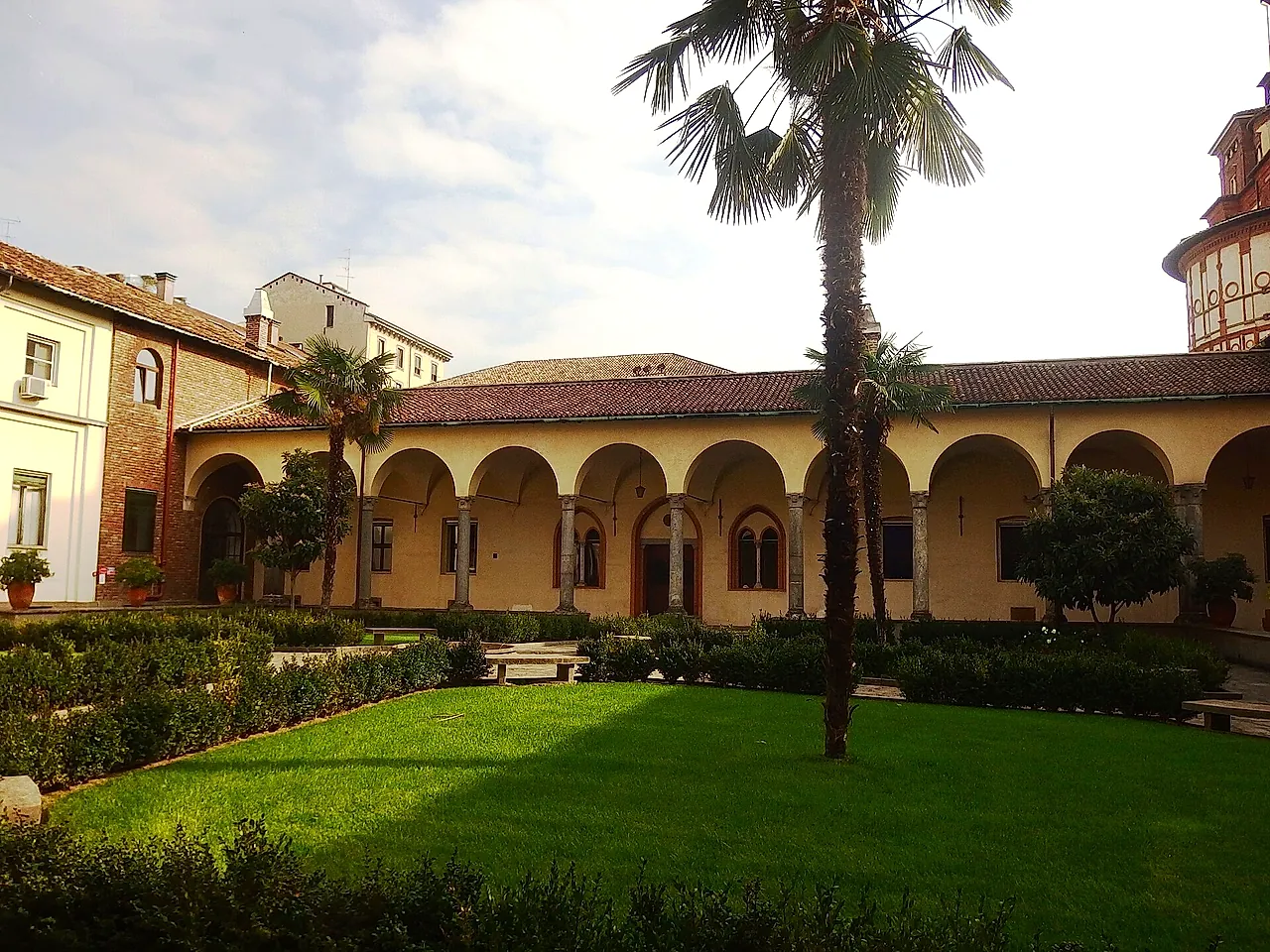
Since September 1980 the Last Supper, together with the church and the Dominican convent of Santa Maria delle Grazie, has been a UNESCO World Heritage site, according to the museum. The photo shows a cloister of the complex; the museum records that the Chiostro dei Morti was destroyed in 1943 and rebuilt after the war.
For the visit the museum offers a free official app and free multilingual leaflets, as well as audio guides, official guided visits and workshops.
Visitor guide
Milan Tours and Experiences: Bus, Bike, Boat and City Card
Seven Milan tours compared: two hop-on hop-off buses, two bike tours, a boat aperitif, an audio guide app and a city card, with what each includes.
Day Trips from Milan: Lake Como, Lugano, Bernina and Maggiore
Day trips from Milan compared: Lake Como, Lugano, the Bernina Red Train, Lake Maggiore boats and Villa del Balbianello: times, languages, inclusions.